
Patient Education Articles
Read our patient education articles below. Use the search bar below or click on a specific topic that interests you!
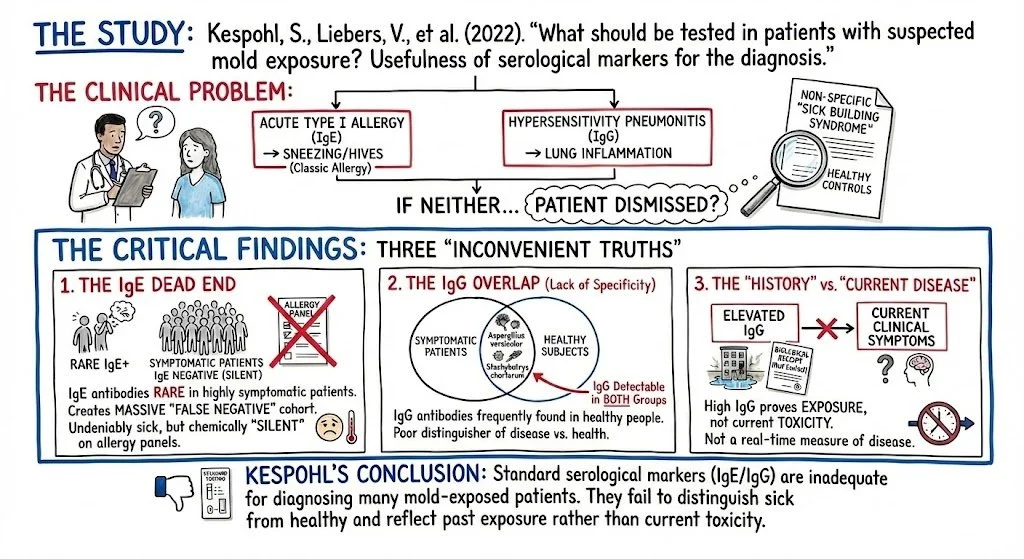
The Diagnostic Blind Spot: The Systemic Failure to Identify Mold Biotoxin Illness
The failure to diagnose Mold Biotoxin Illness is not merely a clinical oversight; it is a systemic error with devastating neuro-immune consequences. Current "Standard of Care" protocols rely almost exclusively on IgE (Allergy) and IgG (Exposure) serology. This binary approach creates a massive "Diagnostic Blind Spot": it correctly identifies the allergic patient but renders the septic, neuro-toxic patient invisible.
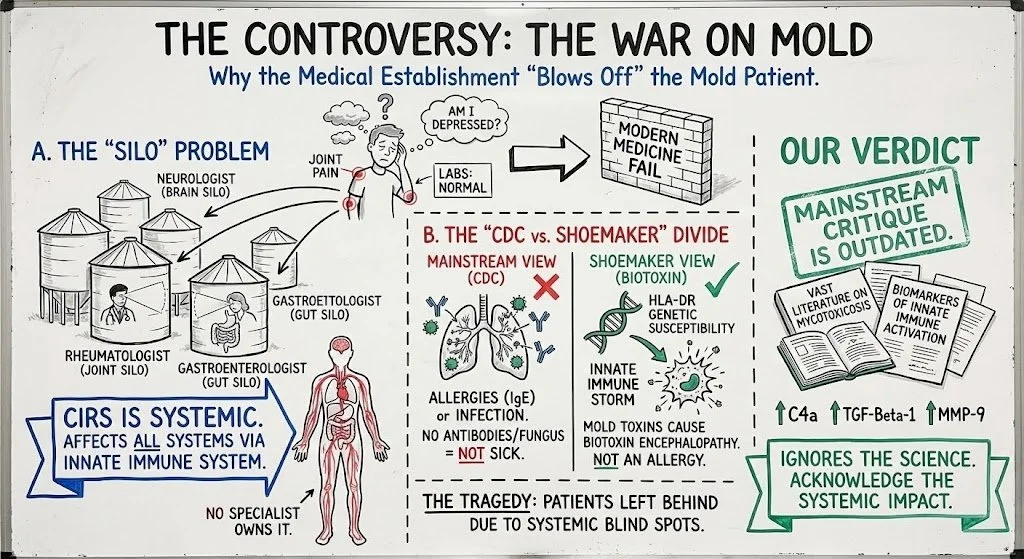
The Shoemaker Protocol: A Forensic Audit of the Standard of Care for Biotoxin Illness
For decades, a schism has existed in medicine regarding Mold Toxin Illness. On one side stands the mainstream medical establishment, which largely views mold exposure solely as an allergic or pulmonary event. On the other stands Dr. Ritchie Shoemaker, a primary care physician who mapped a distinct, multi-system pathology termed Chronic Inflammatory Response Syndrome (CIRS).
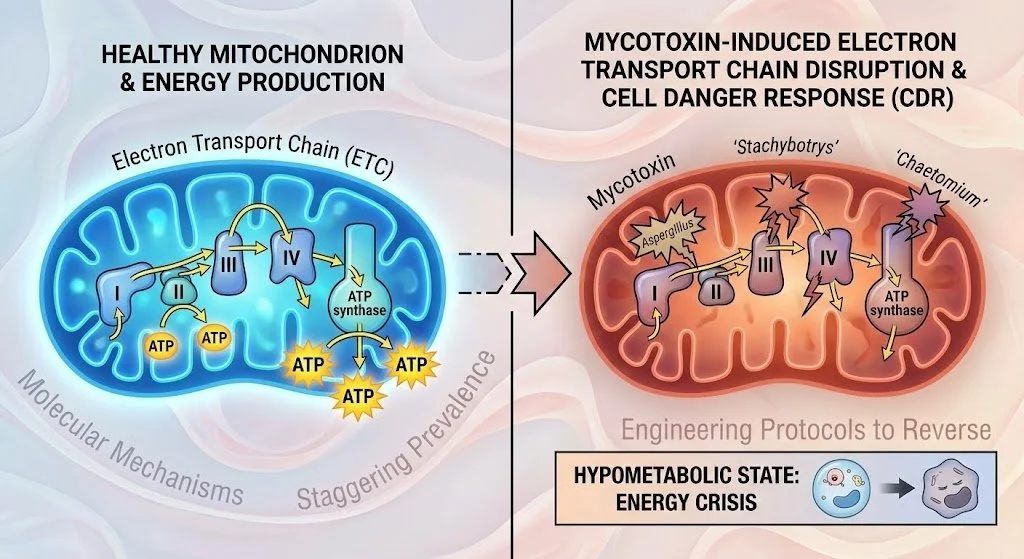
The Mitochondrial Winter: How Mycotoxins Hijack Human Energy Production
Chronic fatigue, cognitive decline ("brain fog"), and multi-system pain are often dismissed in standard medical practice as psychosomatic or idiopathic. However, in a significant subset of patients, these symptoms represent a coherent, quantifiable failure of cellular energy production caused by environmental mycotoxins.
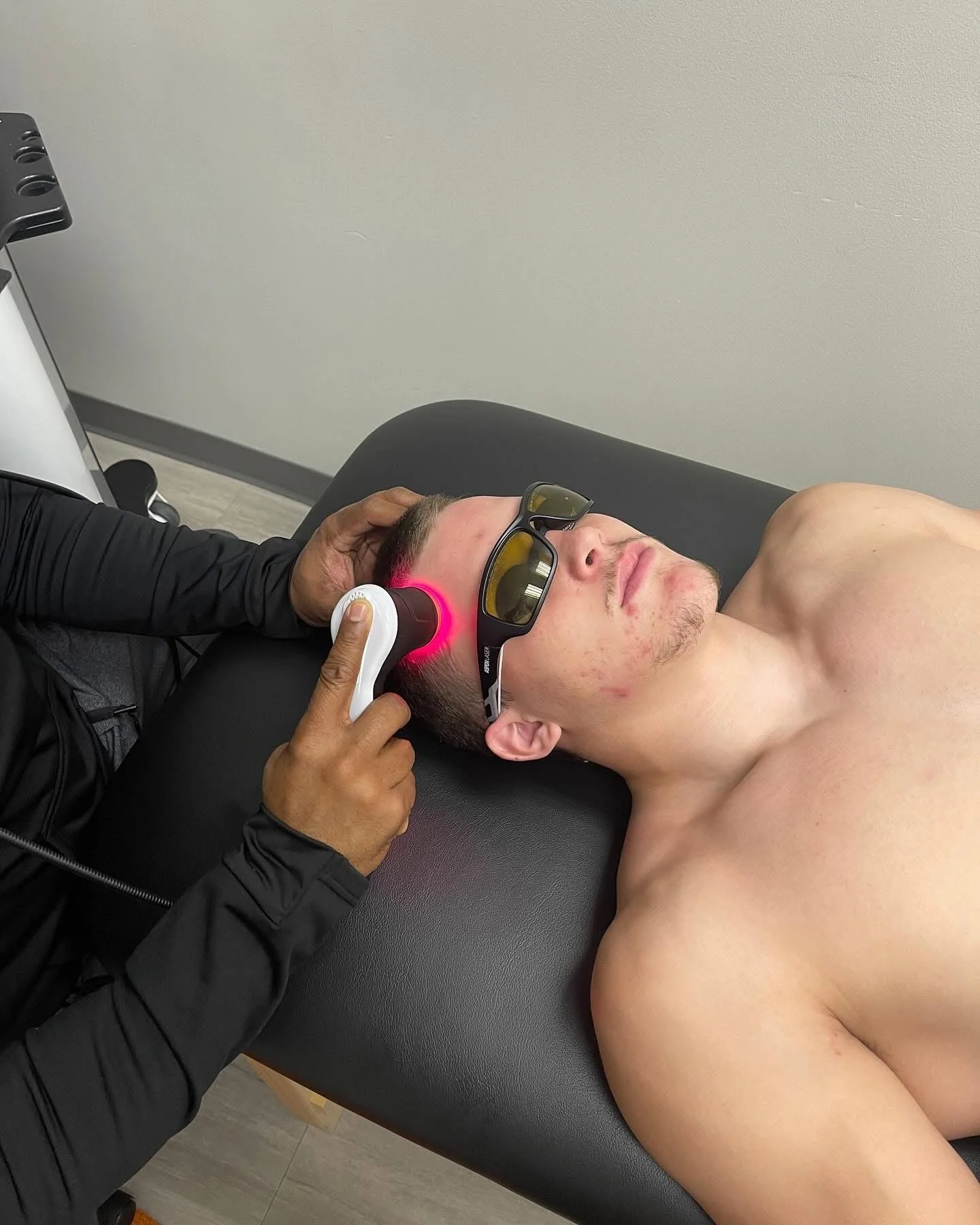
The Moldy Brain: Why Psychiatric Symptoms are Often Environmental Toxicity
Every day, patients walk into clinics with a constellation of symptoms: panic attacks, sudden rage, brain fog, and treatment-resistant depression. They are prescribed SSRIs, Benzodiazepines, and Antipsychotics. They rarely get better. Why? Because they do not have a serotonin deficiency. They have a toxicity problem.